← Blog / Freelancing
From Goldsmith to WordPress: What 20 Years of Jewellery Taught Me About Websites
The function was over, and my friend’s wife was taking off her jewellery when she noticed it. The lock on her bangle was open.
The bangle was still on her wrist.
It was hanging there by a thin gold chain, the one I had added a few weeks earlier, almost against my customer’s wishes. I had never been happy with that lock. My friend was. He was a very good friend, and he insisted it was fine and would never open. I believed him enough to hand it over, but not enough to sleep well. So I added a small chain on both sides, for my own peace of mind. It ended up looking like part of the design. Honestly, it looked better with it.
That night, the lock did exactly what I was afraid it would do. The chain did exactly what I hoped it would.
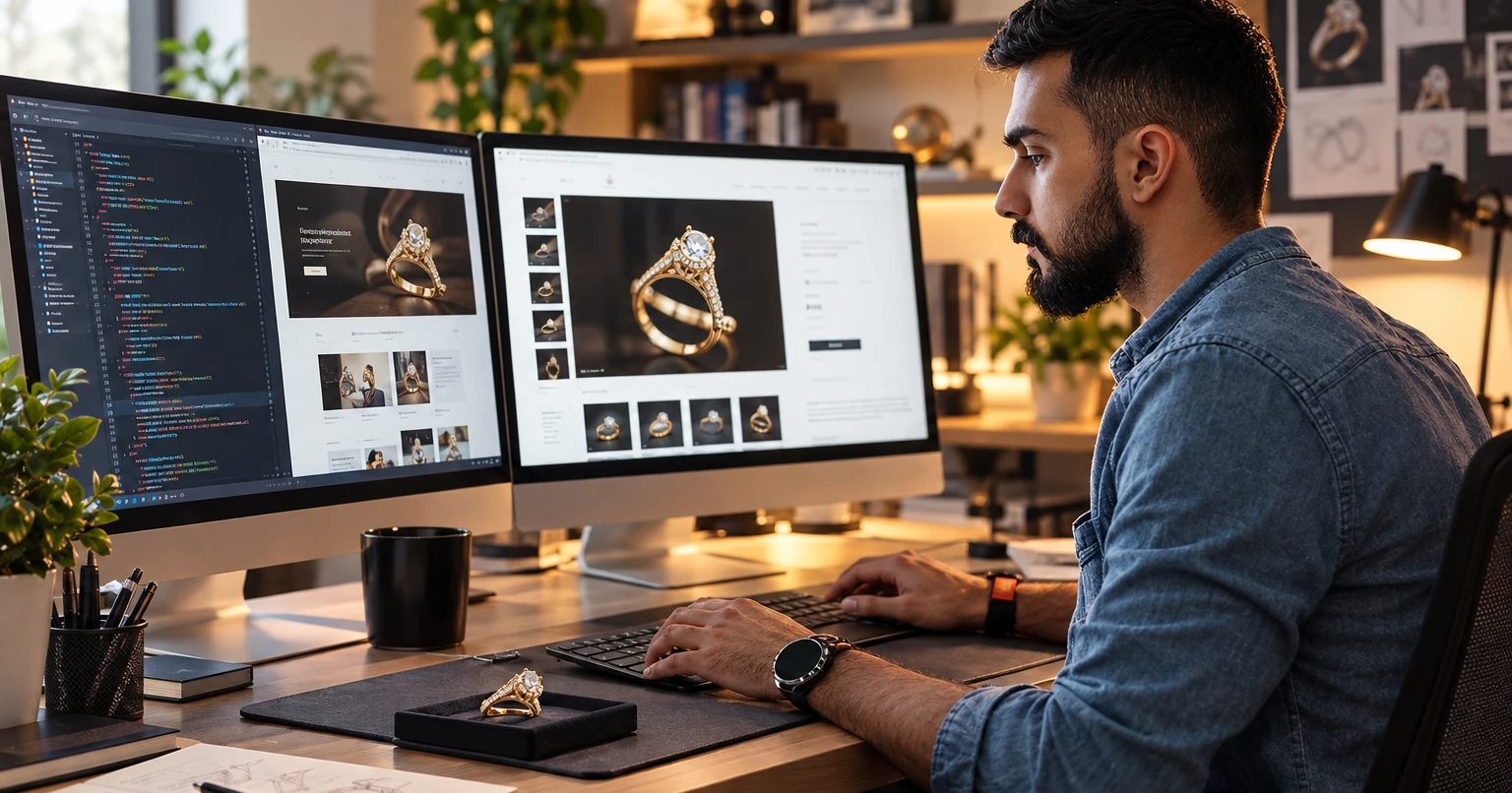
I ran Lushahz Goldsmiths Company in Lahore for twenty years, from 2000 to 2020. In 2019 I started trading the workshop for a laptop. People assume going from goldsmith to web designer was a clean break. It wasn’t. Almost everything I know about building websites, I learned at a jeweller’s bench.
Always add the chain
Every website has a lock: the server, the plugin, the update that is “definitely fine”. Most days, the lock holds. One day, it won’t.
So every site I build gets a chain. Daily backups. A staging copy for testing updates. A contact form that saves every message, even when the email fails. Clients never notice these things, the same way my friend’s wife never noticed the chain until the night it saved her bangle.
The best safety features look like part of the design. Nobody should be able to tell where the beauty ends and the insurance begins.
Don’t measure other people with your own finger
Years ago, a customer ordered a diamond ring. I looked at him, decided his hands were about the same as mine, and made the ring in my own size. I was confident. I was a goldsmith. Measuring was for beginners.
It didn’t fit.
I had to make him a brand new ring. The first one stayed with me, which sounds like a happy ending until you remember it had a diamond in it, and I had paid for that diamond myself. Overconfidence is the most expensive tool in any workshop.
I see the same mistake on the web all the time, including in my own early work. We assume the client wants what we would want. We assume their customers think like us. Now every project starts with questions, not designs. Who buys from you? What do they ask before they buy? What does a good month look like? The measuring comes first. The gold comes later.
Check your tools before you promise the job
At the very start of my new career, I accepted an animation project. I was excited. I knew what the client wanted, and I knew After Effects could do it.
What I didn’t know was whether my computer could do After Effects.
It couldn’t. The machine ran hotter and hotter until some of the parts inside it simply gave up. I lost hardware, time and a fair amount of pride, all in the same week.
A goldsmith would never take an order without checking that his torch and his moulds could handle it. I knew that rule for twenty years. I just didn’t think it applied to a laptop. It does. Before I say yes to any project today, I ask: do I have the right tools, the right time, and the right skills for this one? If not, I say so. Honesty costs less than a burnt motherboard.
The karat stamp is a promise
In the gold trade, the stamp inside a ring tells the customer what they’re paying for. Twenty-one karat means twenty-one karat. The whole business rests on that stamp being true.
Websites need the same honesty. Clear prices. Real reviews. A phone number a person can actually reach. A privacy policy that means what it says. None of it is exciting, and all of it is a stamp.
When I finish a site, I ask one question: would a careful customer trust this enough to hand over their card? If the answer is “maybe”, the job isn’t done.
Change before you’re forced to
I started moving online in 2019. A few months later, COVID arrived, and the world shut its doors. Markets went quiet. Shops closed.
I was lucky, but it wasn’t only luck. I had already started.
Most people don’t want to change what they’re doing. I understand that. When something has fed your family for twenty years, changing it feels like betrayal. But I have always believed in change, in improving a little every year. That belief is the only reason the pandemic found me learning instead of waiting.
Canada doesn’t care what you were
When you move to Canada, nobody asks what you were back home. Even doctors have to go back for Canadian certificates. Your past is respected in conversation, but it doesn’t open doors on its own. You start new.
This is where my switch paid off a second time. Because I was already a developer when I arrived, I didn’t have to rush into the first job I could find. I had projects, website maintenance and client work to keep me going, and that helped me settle in much faster than I expected.
If you’re thinking about moving countries, or careers, or both, here is the one thing I would tell you: start the change before you need it. The skills travel further than you think. Patience with a customer who can’t decide. Respect for the details nobody sees. Honesty about what you’re selling. Those aren’t jewellery skills or web skills. They’re work skills, and they come with you.
As for that diamond ring, it’s still mine.
It fits perfectly. That was always the problem.
Shahzad Sadiq